
FICTION // crazy relu
“ein bisschen verrückt muss man schon sein, um ein Auto zu lieben”

As previewed when last we spoke, I spent part of last week in Bucharest, the city of my parents’ births and the focal point for a not-inconsiderable number of lifelong questions of my own.
Through a series of bureaucratic hiccups and code-red blizzard alerts, the trip ended up getting downgraded from a five-day affair to something in the neighborhood of 36 hours, but I still had a very sick time hitting lots of anticariate, self-consciously trying out my (quite janky) spoken Romanian, and managing a couple of auspicious meetings. I’ll be recapping things more extensively soon, but for the moment I can just let this meme page I found do the talking.
Meanwhile, the trip got me thinking about the following piece of writing, another chunk from the old-ish novel manuscript I’ve excerpted before. This section--which ostensibly deals with Soviet automobiles, the post–Cold-War phenomenon of “Ostalgisch” fetishisms, and contemporary German soda pop innovations--maybe also dives a bit into the kind of historically-layered, cross-lingual dreamspace zone I got to visit last week, albeit just for a second.
P.S.: When I first wrote and published this piece (as part of a long-ago zine), the protagonist was named “Crazy Radu.” But now that I know a couple of Radus, it felt kinda weird, so I swapped it.
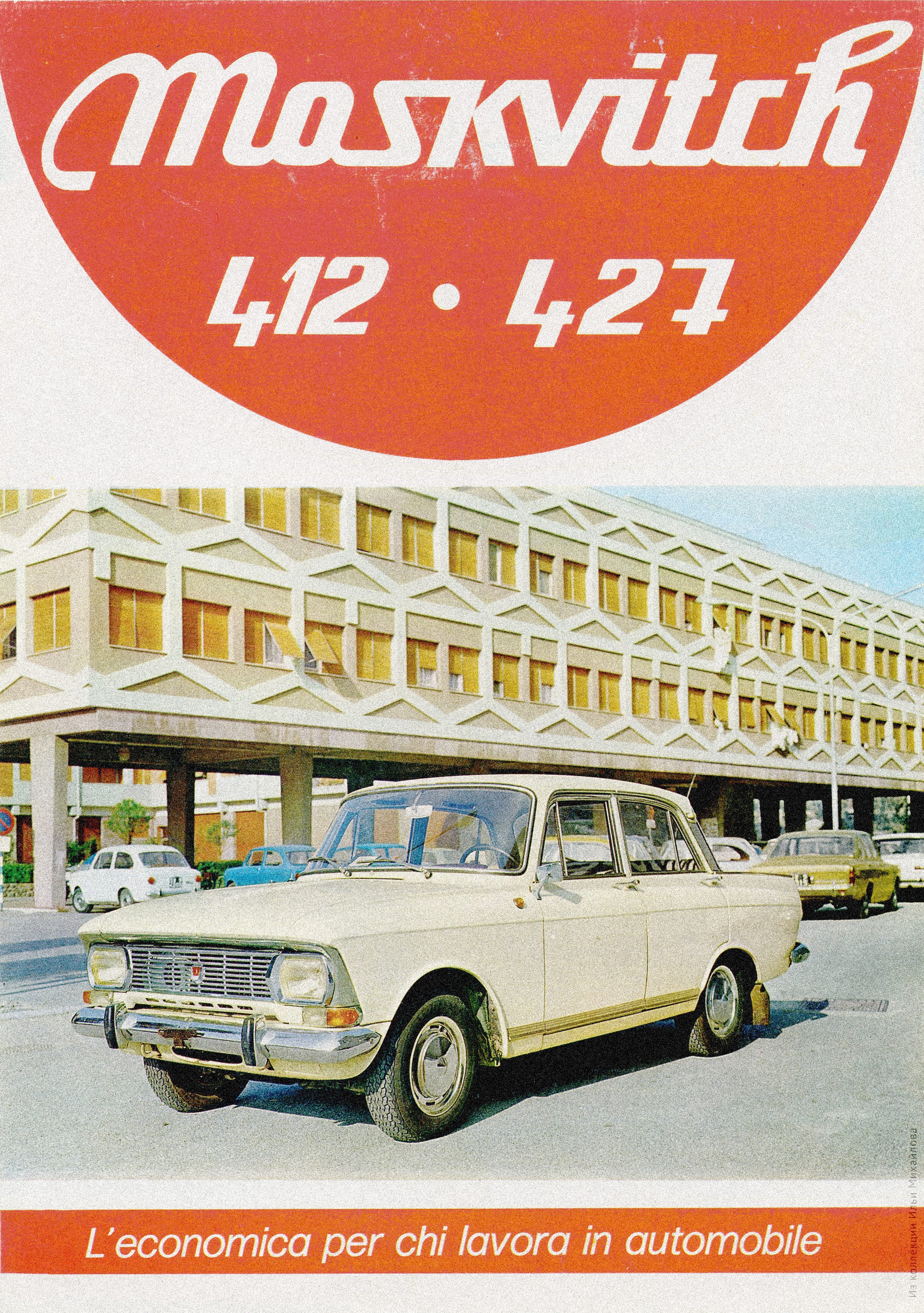
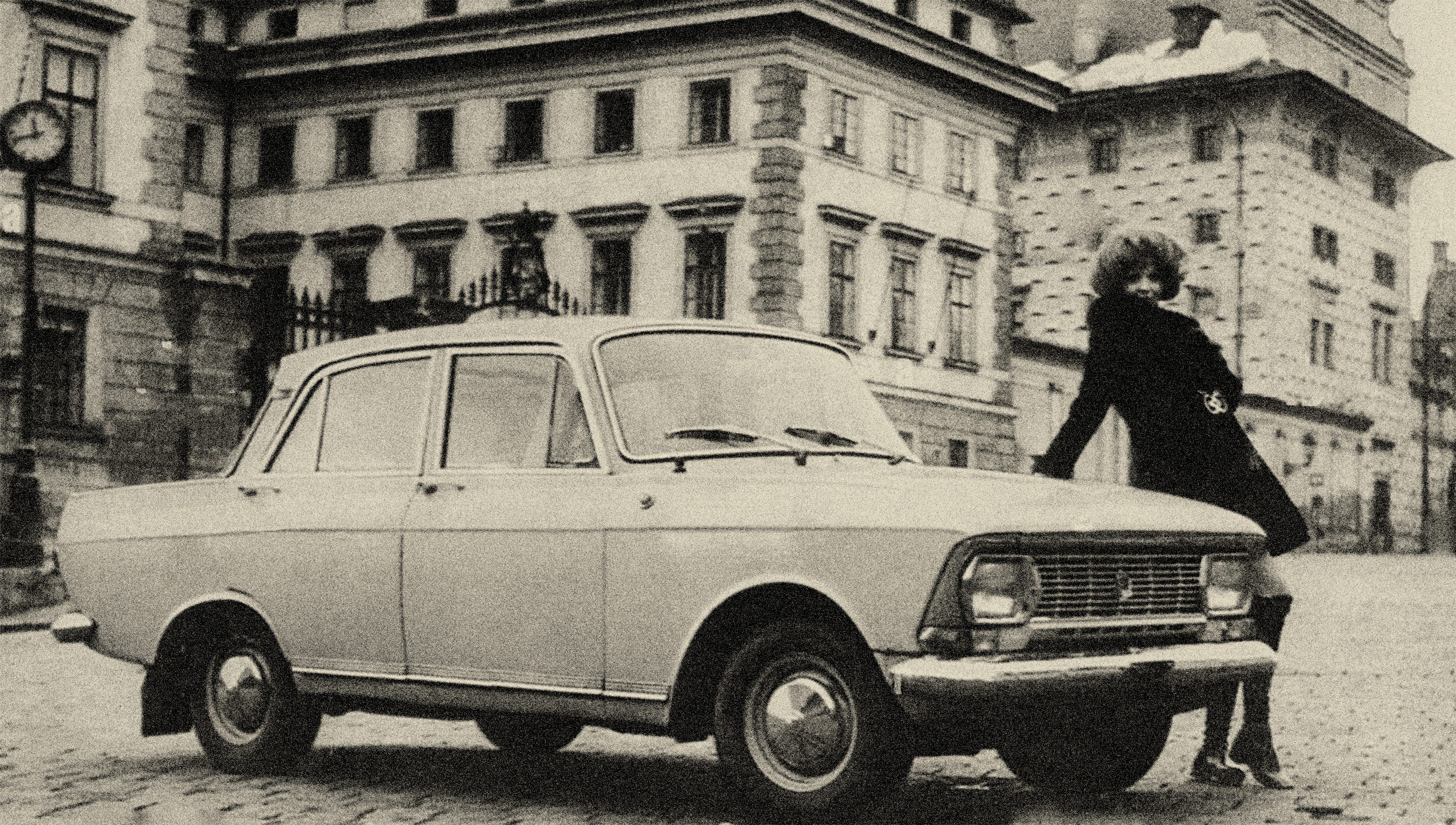
The wreck out back—a custom agglomerate most economically described as an upgraded Moskvich 412, though that hardly begins to cover it—has had a long and fruitful second life, and we needn’t mourn too hard on its behalf. Once an exceedingly rusty old number from the early seventies found tagless and fancy free in a rainlogged salvage yard in East Berlin, it bounced around scrap movers for a few years, narrowly avoided the crusher more than once, and eventually turned up in “Der Verrückte Mechaniker,” a repair shop in Halensee whose name and slogan—“Ein bisschen verrückt muss man schon sein, um ein Auto zu lieben,”—underscored its general business strategy, which was to distinguish itself by cultivating a reputation for mental illness. This meant enthusiastically undertaking outwardly impossible repair jobs, resuscitating wheezing old clunkers, rigging up workarounds to cheat government inspections and emissions standards, stealing rare parts from other garages, and so on. The shop was run by a large Romanian family whose members maintained an especially frenzied air when on the clock—the better to befit their establishment’s branding tack—and were always shouting at each other in front of customers, flying into rages, and publicly smashing things. The owner and lead Verrückter was a bug-eyed and wild-haired mechanic called Crazy Relu whose five sons worked on intakes, spot repairs and scrap runs while he kept an eye on the business end, delegated projects and, once in a while, dove headlong into the sort of repair which, despite baldly defying logical and financial sense, would occasionally pay off huge dividends on some other, less quantifiable level.
Relu really did love cars, and having owned the shop in the early years after reunification, he’d grown used to servicing the different sorts of eastern bloc makes that had come streaming, in the early nineties, over the newly-opened border: janky Czechoslovakian Škodas, Romanian Dacias and, most especially, Trabant 601s, those ubiquitous East German heaps whose finicky two-cycle engines basically made them fume-belching, breakdown-prone four-wheeled motorbikes, or, maybe more charitably, lawnmowers with doors. In fact, one of the shop’s early breakthroughs had been its policy of pinching Trabbi parts from all competing sources (cornering the market on repairs in the unified capital and jacking the prices as supply dwindled), though a recent €2,500 government scrapping bonus offered on the egregious pollutant vehicles had sort of put a pin in that. Another Trabant scheme had consisted of stripping the cars’ plastic body panels which, being made of Micarta (aka Duroplast, cotton fabrics impregnated with phenolic resins from Soviet factories), were actually considerably stronger than steel and impervious to dents and rust. More importantly, though, these Leukoplast-bombe bodies had become fetish objects for nostalgic East Berliners, in whose memories the cars were transformed from maddening junkheaps—markers of lives spent among unwashed concrete and industrial runoff—into fun, scrappy cult commodities. It is now mostly remembered as a joke, but at the time most everyone really did think those body panels were made of some kind of cardboard, and worry that exposing them to too much heat would cause them to go up in flames; they really did spend hours removing air filters and blowing on spark plugs when the carburetor reliably flooded, or push-starting stalled cars downhill and running themselves over; they even sat on waiting lists, often for years, for the privilege of puttering around in a new, rattling 601. Still and all, the wall fell, the so-called Ostalgie held, and today, little white Trabants dot the Berlin streets, inspiring countless whistles of recognition even as they dependably spew their black smoke, often enough in a mechanic’s face.
And to be clear, Crazy Relu himself could be prone to making the same sorts of logical allowances for the sake of wistful reminiscence. Cars just worked on him that way, as portals to vast universes of involuntary memory as directly effective as any tea-sopped spongecake. He experienced certain models via intoxicating synesthetic flashes—snatches of music, specific tastes and smells, unexplainable fireworks of color when he heard a given engine rev, even noticeable physical effects that we need not go into here. But there was a deeper layer. Years in the conditioning lab of the garage combined with a lifetime spent among vehicles of every stripe had by now lent his work such a deeply idiosyncratic dimension that even he couldn’t explain why he made the repairs he did. Though the shop’s customer base loved it, Relu’s kids weren’t sure to what degree the “crazy mechanic” vibes were a put-on, theorizing instead that they provided a useful cover for what was in fact a genuinely deranged streak in their father’s behavior. Relu whispered lovingly to Renault engine blocks in halting, decades-removed liceu French. He busted out laughing at what he claimed were hysterically funny engineering jokes intentionally hidden in certain brakepad designs. He insisted that particular cars “wanted” specific work done for which there was no mechanical evidence. He regularly slept in the shop, often on his creeper cart wheeled all the way beneath one or another rusty jalopy; his sons, who’d long ago resigned themselves to this as to his other antics, just wheeled him out when it was time to open, steeling themselves for another day of acting as sick as this old man seemed actually to’ve become.
And though he often loudly insisted that such direct or obvious linkages played no role whatsoever in his process, it was plain to see that Crazy Relu had particular emotional ties to the cars of his youth. On the morning that Dragoș, his youngest, wheeled the broken-down Moskvich into the lot, he woke with a start beneath a decommissioned Wartburg 353 police wagon—he even dinged his forehead on the front bumper and sent the creeper cart careening into a rack of jack stands—and immediately ran outside, in a grease-stained A-frame and tighty-whities, tears already forming at the corners of his groggy-eyed gaze as, in front of a rapidly-forming queue of morning customers, he actually fell to his knees in exaltation.
He had, at the age of twenty-five, watched as his own Moskvich 412 was smashed to pieces in the big 1977 Vrancea earthquake that decimated Bucharest, and while he had ever since retained, sure, something of a soft spot for the old compacts, he had never before noted the searing feeling of recognition coursing through him now, an all-over bodily effect, some field resonating harmonically with a deep-seated and long-disregarded store of memories suddenly kicked into frantic activity, all abuzz, scores of tiny voices telling him this was it, not the same model, not a comparable specimen, but it: in some real, undefinable way, this was his car. He immediately called off every other job, sent his sons home for the day, and shuttered the storefront. In a wholly unprecedented move, he referred his backlog of work to rival garages, which bizarre gesture, combined with his uncharacteristically calm demeanor over the phone, made Andreas Unger at “Automania” across town assume he’d been the victim of a prank call. When the garage was clear, Relu got to work.
The whole thing took two weeks of manic, round-the-clock activity. Relu transplanted a Mazda Z-engine under the hood, which he also replaced along with the fenders, doors and body panels themselves (none of that Trabbi Bakelite either; old Moskvichs were loaded down with steel, and that’s the way this one would stay). Painted the whole thing in factory “ivory,” really just beige, reinforced the subframe and replaced all shocks and springs, snaked a tube and rudder from a similar model off of a crosstown competitor, and fashioned the instrument panel from various trashed odo-, tach- and speedometers. When everything ran well and looked alright, he made with a showy unveiling for the benefit of his poor kids—who’d been on indefinite leave from work this whole time—and their wives and children.
“Cool,” from his cellphone-toting ten-year-old granddaughter Hanna as Relu dramatically whipped the tarp off of the gleaming, waxed machine, “aber hat es auch einen MP3-Player?”
Relu’s sons had bigger concerns. The shop’s finances had never exactly been the picture of stability, and private questioning on the wisdom of closing up for a period of weeks to work on a single car of dubious resale value had given way, these last few days, to more decisive action. If the car wasn’t sold in the next month—was the gist of their ultimatum—they were all quitting.
Garage fumes or else something else lending a certain teary-eyed gleam to his expression, Crazy Relu made with a sober nod, clocked firmly the real concern on the faces of the five sons who had followed him into this foolish business. He offered them a grease-stained palm.
“Hand drauf,” he told them, meaning ‘Let’s shake on it.’
But wouldn’t you know it? Relu’s confidence wasn’t misplaced. In fact, that the car should be resold quickly and lucratively—not a month but just a day or two later—could have been, looking back on it, the only logical conclusion to the manic Moskvich quest. A confirmation, maybe, that his recent behavior was outwardly ordained, dictated by an external intelligence, set in motion with an agenda unknowable and all its own. Best explanation, anyway, for how the sudden and desperate desire to refurbish this vehicle was met, one or two days after its completion, by a mysterious buyer whose go-between had said just enough to ensure that the Moskvich was the car being sought. It hadn’t even hit the showroom; how could the buyer have known about it? Had someone at the garage been talking? Was another party snooping around? More sinister yet, could the car have been sent to Relu with just this result in mind? Or was all this second-guessing, heh, just a touch of the old Verrücktheit? No matter; point is, when the call came in, Relu wasn’t surprised.
“My client is an American, a collector of Communist-era automobiles,” breathy reed-thin voice on the line, ‘UNKNOWN NUMBER’ on the caller ID readout, natch.
Relu’s English was good, but a momentary fluster came over him just the same. He took a breath. “Well, we see many luxury models from that time”—dangling some alternatives though, feeling at this negotiation’s unspoken contours, he swore he could already tell where it was going—“a Tatra for example? Or we could find you perhaps a Volga GAZ?”
The voice let out a tight, clipped laugh. “My client would prefer something more working-class.”
Relu grinned at the confirmation, though there was a sour undertaste in it. “I have maybe a Soviet model or two in stock.”
“We intend for the car to be exported to and driven in the United States. We can secure the necessary paperwork. A representative will be sent to your establishment. The vehicle must be fully functional.”
A beat. “Something restored?”
“Exactly.”
They made an appointment for late that night, after regular hours. The shop’s mysterious closure and reopening having stoked widespread curiosity in the neighborhood, business had been booming the last few days, so there were loads of cars on the premises again, whether in for repairs, quick salvage jobs or restorations. Most everything was covered up with tarpaulins when, stepping through the Mechaniker’s front door into full fluorescent radiance of the overnight wall lamps, the point man finally showed up.
Relu, having detected a certain mustache-twirling lilt to things on the phone, was expecting some kind of spy movie villain or Dr. Mabuse type; a tuxedoed, vampire-caped deal, or at least a trenchcoat, mysterious briefcase, something. Looking over the “representative” who’d actually appeared before him, then, Relu tried not to let his disappointment show. It was a sweatshirted, baseball-cap-wearing, utterly generic youth of about twenty-five, toting a university-branded backpack and a bottle of orange Schwip Schwap. He could’ve been one of any of the untold hordes of collegiate arrivals down from London or Canada or the States, the thrilled new Berliners that now clogged late night U-Bahn platforms, techno clubs and wine bars, just as often, Relu’s shop, gratingly insisting on repairs to perfect vehicles for which they had neither intuitive feeling nor mechanical knowledge and, thus, no right to drive. Service employees of every stripe had been dealing with such entitled shits since Berlin’s reputation for baby-leicht party-oriented living had lent the poor old capital enough glamorous cachet to put it squarely in the path of massive tourist and gentrification waves, meaning this aspect of life in the new Germany was by now more than fully old news. So when the clincher came—as the young man cleared his throat and, in a polite Midwest American register, asked for “Rad-oo”—the deflation of spirit that seized our humble mechanic was practically audible.
“Yes I Relu, how I can help you.” He sometimes put on this no-English act for the tourists, dialing up the Slavic resonants, bit of code-switching he found helpful for getting out of tedious explanations or nipping disadvantageous haggles in the bud.
The stranger didn’t miss a beat. “Ați prefera să vorbim românește??”
Okay, so here was a wrinkle. “You speak Romanian?”
He knew cars, too, as it turned out. Introduced himself as Lindh Steinberg, “Outreach Officer”—as this thick black business card had it—for Opal Artists LLC, a media shingle based in New York that represented publishers, galleries, record labels. ‘Outreach’ being a worldwide effort these days and languages having always come easy to him, Lindh explained, he’d managed to build up a decent command of the major and minor Romance tongues as well as a slew of Germanics. A little bit of Russian, too, but they had a different guy onsite for that.
“But what this has to do with the Moskvich,” Relu blurted out, regretting that last word immediately. Why mention a specific make? They had kept things suitably vague on the phone; the identity of the vehicle was the only leverage he’d had. Now he’d never know how much they’d known beforehand.
But if the info was new or surprising to Lindh, he had a funny way of showing it. “One of our musicians, a band actually, wants it,” he shrugged, leveling—or appearing to level—with Relu in a way that, in spite of lingering suspicions, had its disarming effect.
Before Relu knew it, the tarp had been lifted and he’d proceeded, in full salesman mode, to lovingly show off the vehicle’s rebuilt engine and modern features. Lindh’s questions—had Relu swapped out the oil filter for something leak-proof? Had he reinforced the axels after the engine rebuild?—betrayed what was either a carefully-studied or honestly-arrived-at knowledge of Soviet automobile design. But which was it? And why should some American kid know, or care, about this stuff in the first place?
“But the man on the phone,” Relu’s eyes locked on the camshaft so as not to betray any emotion besides the usual vehicular ardor, “he said the car was for a collector, not musician.”
“The buyer is the band’s manager,” Lindh nodding, affect flat, “or rather, it’s Opal, making the purchase on the manager’s behalf.” The musicians in question, he explained, wanted the car for photoshoots, record covers, music videos, after which it’d belong to this manager figure, who was a collector and archivist, and who’d probably been the one to plant the idea in the musicians’ heads to begin with.
“Who was the man on the phone?”
“My boss. One of our directors back in the States.” That shrug again, as if it were all uninteresting, impertinent detail.
A clock hung over the window. It was an old BMW novelty gift someone’d managed to snap up in a city junk shop and present to the family at the Mechaniker, a promotion for the aborted 507 convertible. The long hand ended in a cardboard cutout of the little sportscar, and watching it glide the circumference of the clock’s face had long figured as a a solid way to make any auto-manipulator in the area fall into a light trance. Now Relu chanced a quick look. It was midnight. “Why this group wants a Moskvich?”
Lindh smiled and took off his large black Jansport, which he’d been wearing, absurdly, since he’d come in. Unzipped it and pulled out a large flat object at which Crazy Relu, carefully studying the gleaming carburetor to fight off an emergent, improbable case of nerves, only permitted himself the subtlest peripheral glance.
“Hey, psst,” Lindh picking up on the energy. “It won’t bite.”
Relu didn’t want to look, but at some length and effort, feeling stupid, he did. It was an old LP cover, weathered, scuffed at the corners and, most notably, layered with a few generations of handwritten pen markings, notes, scribblings, symbols, extending across the top in black marker. Nothing he recognized, but the LP itself was another story.
“It’s their favorite,” Lindh explained. “They wanted to recreate the cover, original thinkers that they are.”
The first and only album by a group called Kustom Kar Kommandos, this self-titled number here had been one of those one-copy-per-city, breathlessly-traded records that sometimes managed to sweep the Bucharest of Relu’s youth, thanks to some intrepid soul who’d manage to smuggle them in—in this case, himself. The country hadn’t exactly been known for its rock’n’roll pedigree, and Western tunes were scarcely heard on the radio or seen in stores, but every so often, something managed to slip by, become an object of feverish whispering, spend a few days on every turntable in town and then vanish as quickly as it had come. Relu hadn’t seen the album, whose sun-bleached cover image depicted the wreck of a beige Moskvich 412 in an anonymous Central European field, since he’d handed his copy over to his brother three decades earlier.
“So what do you think?” While Relu had been gawking at the record, Lindh had scribbled his offer on the backside of a promotional oil change flier and slid it over. “Deal?”
Relu, in a kind of daze, noted blankly to himself that the sum was enough to pay a year of overhead for the entire garage. “How... does this American band sound like?”
Lindh thought for a second. “Do you like Sabbath?”
      ____                      _____________          _____________
 ____//_]|________         ____//__][__][___|     ____//__][______||
(o _ |  -|   _  o|        (o  _|  -|     _ o|    (o _ |  -|   _   o|
 `(_)-------(_)--'         `-(_)--------(_)-'     `(_)-------(_)---'
    ______________      ________________         __________________
   //__][__\\____\\    //__][__\\___\\__\       |[_][_][_][_][_][_]|
  (o _-|         o|   <o  _||  -|   _  o|       |o _         _  _  |
   `(_)-------(_)-'    `-(_)-------(_)--'        `(_)-------(_)(_)-"
   ____________              ______               ______
 ____//__][__\\___\        ____//__][_\       ______//__][_\__
(o _ |  -|   _   o|       [o _ |  -| _ \     /o _   |  -| _   \
 `(_)-------(_)---'        `(_)-----(_)-'    `-(_)-------(_)---'
________               _____                   _
    ____//__][__\\___      ____//__]|               ___//]    ____
   (o _ |  -|   _  o|     (o _ |   -|_________     |o_   '---' _ |
    `(_)-------(_)--'      `(_)-------(_)(_)--'    `(_)-------(_)''
      _               ______________                _
 ____//]_________       ____//__]|        |         ______//________
(o _ |  -|  _  o|      (o _ |   -|  _  _  |        /o _   |  -| _   \
 `(_)------(_)--'       `(_)-----'-(_)(_)-'        `-(_)-------(_)---'